Plot
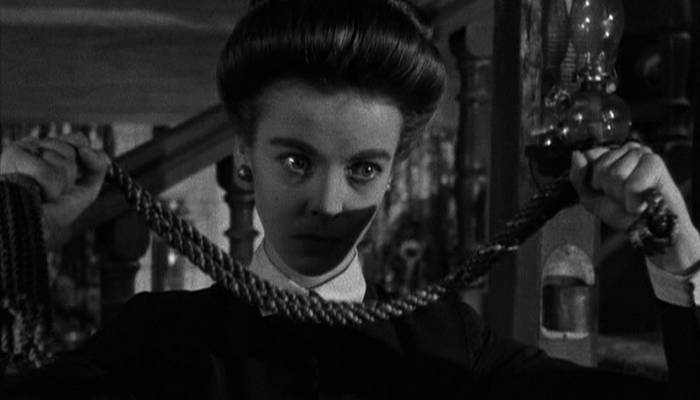
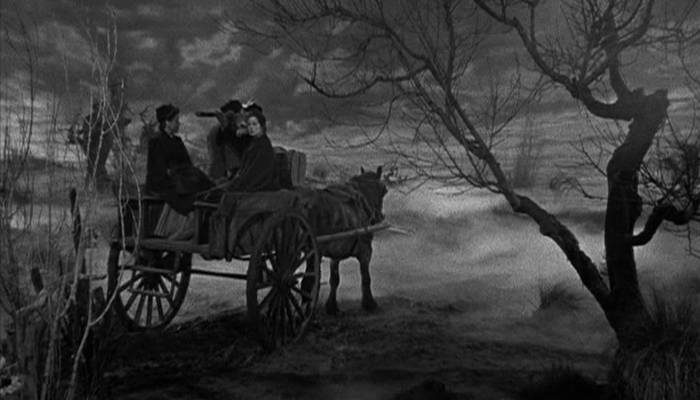
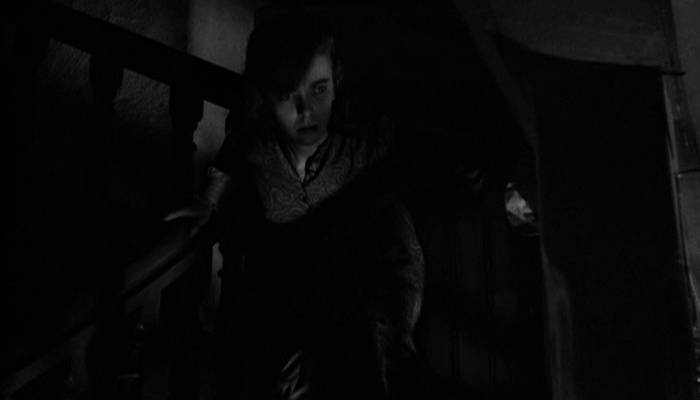
It’s the late nineteenth century. In a charming, fog-enshrouded house in the moors outside London, Ellen is the starched and reserved housekeeper/companion to Miss Fiske, a haughty, eccentric former actress and chorus girl. Ellen receives a letter to the effect that her two mentally troubled sisters living in London are too “scandalous” and will be removed to an institution if Ellen doesn’t act quickly. The cool, calculating woman convinces her employer to allow the sisters to come for what Ellen disingenuously intimates will be a brief visit.
The purported two days stretches into weeks, and as the deranged and honestly unpleasant sisters wear out their welcome, Miss Fiske reaches her breaking point (“Your sisters, insane or not, have overstayed their welcome. I invite them here for two days and they’ve stayed six weeks. Or perhaps you were planning to keep them here forever?“). No longer willing to tolerate the noise and disorder the sisters have brought to her tidy, well-appointed home (“For the last six weeks I might have been living in the middle of Piccadilly Circus!“), the retired spinster puts her foot down and gives the sisters their marching orders. When Ellen attempts to argue, an indignant Miss Fiske fires her on the spot.
With her back against the wall, the ice-cold Ellen strangles her employer, hiding the body in an old bake oven which she bricks up for good measure. Anyone who asks is summarily told that Miss Fiske is on an extended vacation, and Ellen tells her sisters that the older woman sold her the house prior to departing, but they must swear on a Bible to never repeat a word about it to anyone as long as they live. Meanwhile, Ellen is “handling” Miss Fiske’s financial affairs, including signing checks in her former employer’s name.
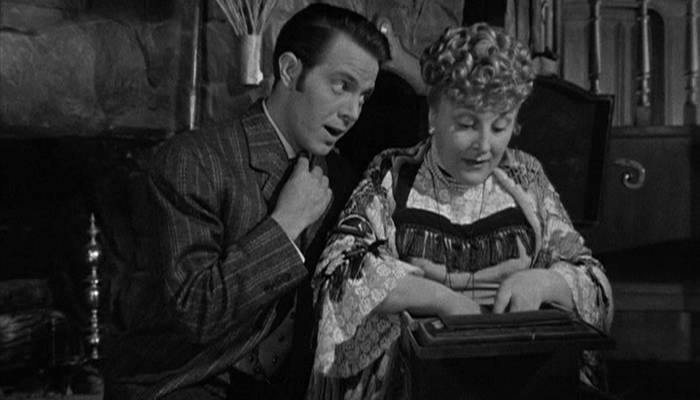
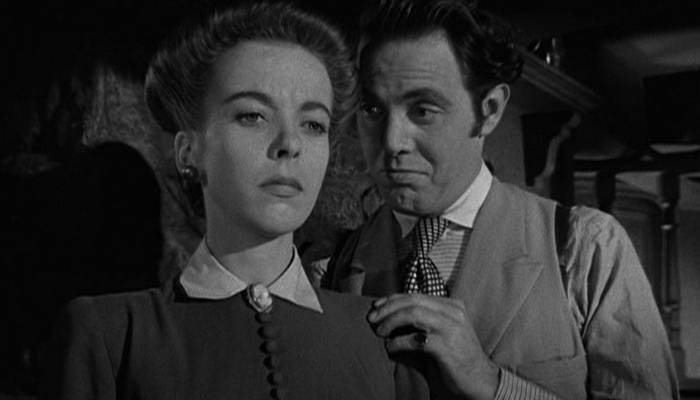
Ellen’s plan seems to be on solid ground, but the unexpected visit of a very distant “nephew” (“Her mother was my step-father’s uncle’s second wife“), a beguiling but sociopathic young man with a shady past, marks the prelude to catastrophe.
I don't like Miss Fiske. Couldn't we send her away? Then it would really be just the three of us.
Critique
7.5Charles Vidor directs a female-focused melodrama deeply rooted in the finest British Gothic tradition, with its inhospitable Victorian setting and string of obsessive characters reminiscent of those from the Brontë sisters’ timeless masterpieces, namely Emily’s “Wuthering Heights” (1847) and Charlotte’s “Jane Eyre” (1847) (perhaps coincidental, but the film’s repeated references to Rochester inevitably call to mind the iconic “Jane Eyre” character).
Based on a 1940 Broadway play of the same title by Reginald Denham and Edward Percy (both of whom worked with Garrett Ford on the cinematic screenplay), the film gives you a sinking feeling right from the start, something akin to being trapped in an elevator inexorably plunging into the deepest depths of the darkest hell.
Bolstered by Ida Lupino’s intense performance, “Ladies in Retirement” (the weak, misleading title does the movie no favors) is a film noir to its core, confronting several compelling moral and psycho-existential topics: first, there’s guilt, blame, and sin in the context of a world still permeated by Christian morality but buffeted by the chill winds of hypocrisy. Then there’s our civic and humanitarian responsibilities in a society that looks askance at mental illness (it’s hard to miss the references to the sisters being “potty” and “queer as mice in a cage” and having been beaten, starved and threatened with institutionalization as part of a general mistreatment of the mentally disabled). Finally, there’s the inherently unjust reality that hardly lives up to society’s lofty values and precepts. The weak, rushed ending in which law and order triumphs feels like a cop-out. Blame the Hays Code.
Bernard Girard’s 1969 version (“The Mad Room“), with its greater emphasis on the thriller-horror component (and an improved title), deserves a mention.
More Info
- Based on the play "Ladies in Retirement" (1940) by Reginald Denham & Edward Percy
Quotes
- It takes a lot of courage to kill for the first time, Albert. Once you've sold your soul to the Devil it becomes easier... much easier.
- One with her telescope and the other with her mania for collecting things. They are insane, both of them!
- I don't like Miss Fiske. Couldn't we send her away? Then it would really be just the three of us.
Trivia
- Ida Lupino was still in her early twenties when she played the character of Ellen Creed, written as a middle-aged spinster. In addition to a memorable acting career (with appearances in 59 films), Lupino also directed several small independent films, and was the most prominent, if not the only, female director working in Hollywood in the 1950s. She became the first woman to direct a film noir, “The Hitch-Hiker” (1953), and later found success directing more than 100 episodes for television as well.
- The film raises the question of the inherent gravity of different crimes. In line with well-established contemporary Western conceptions, homicide is considered a far more serious crime than robbery (‘There are worse things than stealing.’ ‘As for instance?’ ‘Oh no, there’s no blood on my hands.’). This perspective first emerged in the Renaissance, but fully came into its own only later, during the Age of Enlightenment, (there is little consensus as to the precise dates of the Enlightenment, also known as the “Age of Reason”, but it’s generally considered to be a “long” 18th century, originating as early as 1650 and concluding by 1815), and it represented a sharp contrast from the commonly accepted viewpoint on the seriousness of murder of prior eras. Noted Italian historian, novelist and essayist Alessandro Barbero sheds some light on the topic in his lecture “Omicidio e Vendetta nel Medioevo” (“Murder and Punishment in the Middle Ages”, available on YouTube). Here are some enlightening excerpts: Dr. Barbero starts by highlighting fact that Medieval societies “Were united by the concept that murder is something that […] could happen to anyone; […] it’s a basic human drive […]. In the Middle Ages they took it for granted that you couldn’t stop people from killing someone who annoyed them. […] It’s something that happened all the time and didn’t spark the same repugnance as theft, for example. In every Medieval society, theft was severely punished, because it was something that you did deliberately, with a clear head, and it violated the rules and harmed the community. […] Meanwhile, if you killed the neighbor that you’d been arguing with for some time, this wasn’t a reason for others to fear you; you had your reasons for killing that neighbor. Consequently, you’d certainly done something serious, but your actions didn’t elicit terror. […] Not only in the Middle Ages, but well into the modern age, it’s quite clear that, in contrast to the contemporary world, someone who committed murder was hardly regarded […] with caution and suspicion. […] There were plenty of people – even from the upper classes – who committed murder and… and it was then dealt with according to precise rules”.
Products
Disclosure
This page contains affiliate links. As an Amazon Associate I earn from qualifying purchases.
Image source: Amazon Partner Program
| Product name | Price | |
|---|---|---|
 | Ida Lupino: A Biography | |
 | Ida Lupino, Forgotten Auteur: From Film Noir to the Director's Chair |
| Nome del prodotto | Prezzo | |
|---|---|---|
 | Tenebre (1941) |
| Product name | Price | |
|---|---|---|
![Ladies in Retirement [DVD] [1941] [Region 1] [US Import] [NTSC]](https://m.media-amazon.com/images/I/51Mr2VjNLqL._AC_.jpg) | Ladies in Retirement [DVD] [1941] [Region 1] [US Import] [NTSC] | |
 | Ida Lupino, Forgotten Auteur: From Film Noir to the Director's Chair |
| Nombre del producto | Precio | |
|---|---|---|
 | El Misterio De Fiske Manor |
| Produktname | Preis |
|---|
| Nom du produit | Prix |
|---|
| Product name | Price | |
|---|---|---|
| Ladies in Retirement | |
 | Ida Lupino: A Biography | |
| Ida Lupino, Forgotten Auteur: From Film Noir to the Director's Chair |