Plot
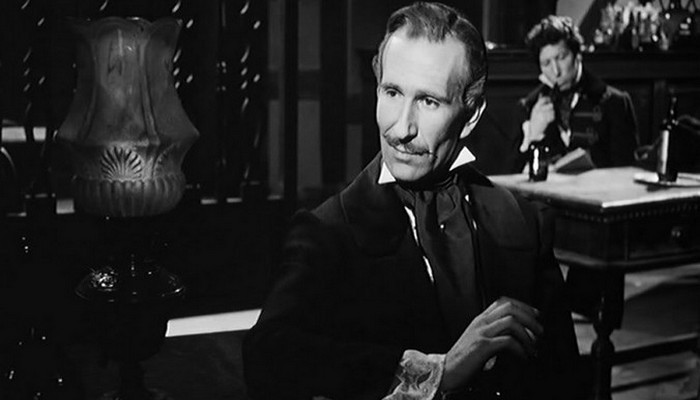
In a London pub, journalist Alan Foster joins a conversation between Lord Thomas Blackwood and well-known novelist and poet Edgar Allan Poe.
In the face of the latter’s staggering revelation that his literary creations aren’t the fruit of a fervid imagination, but rather objective accounts of real events, Foster expresses skepticism about anything having to do with ghosts and otherworldly spirits (“I think life’s cycle culminates with death and entombment… after that, well there’s nothing… it’s the end“).
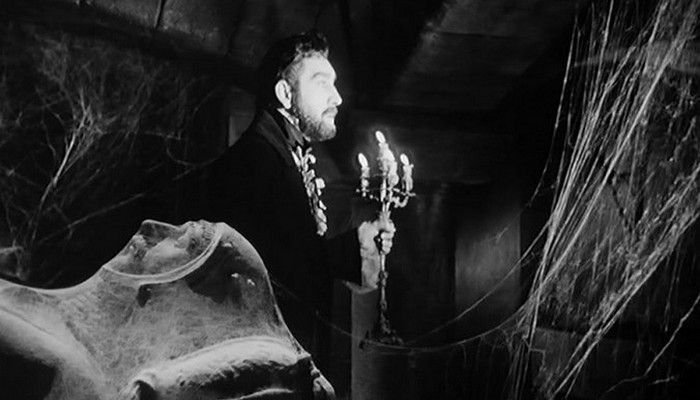
Seizing the opportunity, the aristocratic Blackwood challenges him to spend the entire night of All Soul’s Eve in his Providence castle (wait, was this Poe or Lovecraft?). The young journalist unfortunately accepts the challenge…
I seek to locate a courageous man to see if he’s willing to spend the night in the castle and dispel the legend.
Critique
6.5Underrated director who made versatility his trademark, Antonio Margheriti (alias “Anthony M. Dawson”), was the craftsman behind a handful of extremely effective Gothic horror movies spanning an entire decade (1963-1973).
“Castle of Blood” is a worthy example of his work, sort of an abridged version of Edgar Allan Poe’s poetry, which particularly raises metaphysical questions of the transitory nature of the boundary between life and death (“Death isn’t completely accepted unless the victim is ready to die“). Using time dilation and a purposely unhurried narrative pace, Margheriti emphasizes the dreamlike nature of a story rich with subtle eroticism and characterized by the torpid recursiveness typical of twilight states of consciousness.
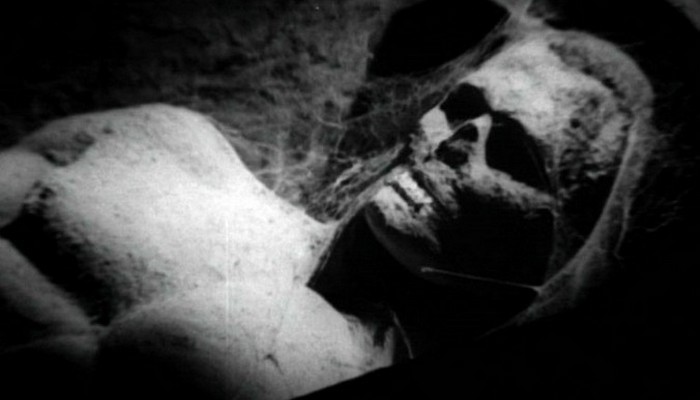
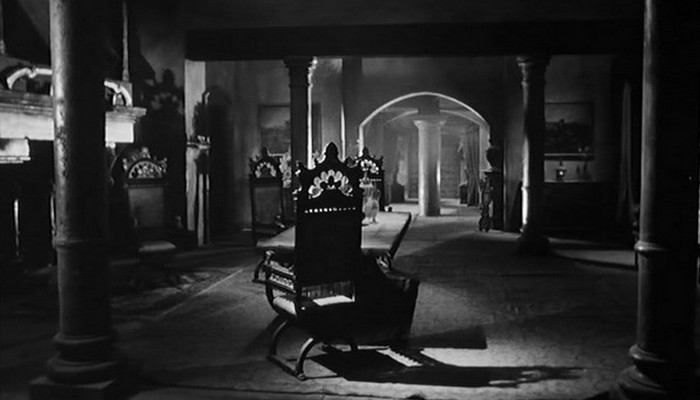
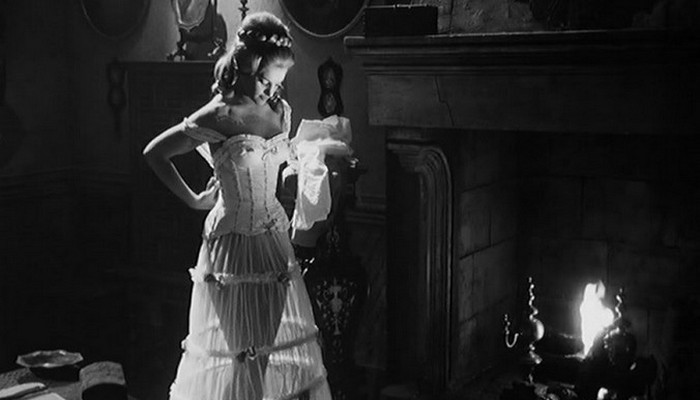
Almost entirely filmed with interior shots, the film avails itself of Riccardo Pallottini’s refined B/W, essential for generating that sense of irresistible enchantment that seems to ooze first from the very castle walls, then from the anechoic presences. These presences, although basically ghosts, demonstrate features in common with vampires, such as requiring fresh blood to remain viable (analogous creatures will turn up later in Massimo Pupillo’s “Lady Morgan’s Vengeance“, 1965).
Still, it bears mentioning that the film clearly shows its age more than a half century after its release. In fact, despite retaining some interesting aspects, the work appears rather dated, an opinion expressed by Margheriti himself in one of his most recently granted interviews – basically, the wearisome wanderings of Alan and Dr. Carmus would be particularly hard for modern audiences to stomach. As far as the characters are concerned, the ethereal Elisabeth stands out, played with a “vis tragica” by Barbara Steele, whose undeniable charm seems to grow on everyone (men and women, dead or alive).
The film could have done without the scene where a poor grass snake – being passed off as the lethal poisonous variety – gets brutally decapitated.
More Info
- Inspired by the literary universe of Edgar Allan Poe
Quotes
- It is only from midnight tonight, the first midnight in November… until the sunrise that you may see the dead come back to perform again those tragedies which cost them their lives.
- I seek to locate a courageous man to see if he’s willing to spend the night in the castle and dispel the legend.
- The candles are being extinguished simply by the wind.
- Alan, my dearest, you will give me life.
Trivia
- Starting in the Late Middle Ages, the “Danse Macabre” (also called the “Dance of Death”) became a classic subject permeating European figurative art. Its distinctive literary-iconographic structure consists of allegorical images accompanied by texts with the basic theme of living individuals – young and old, male and female, from every rank and station of society – being escorted to their graves by ghostly or skeletal figures symbolizing Death itself. The living, shocked by the vision, find themselves confronting the inevitable all-conquering and equalizing power of death, and thus lose their will to resist. Such representations weren’t devoid of irony however: the astonishment and reluctance of the living in the face of the gloating skeletons (generally depicted in a mocking dance) includes a comic, consolatory, even joyful response to loss and grief. One of the earliest documented examples of the “Danse Macabre” was painted in 1424 on the wall of the ossuary of the Holy Innocents’ Cemetery in Paris.
- There’s a sort of remake of the film, also shot by Margheriti, distributed as “Web of the Spider” (1971).
- Margheriti replaced Sergio Corbucci after a few days of shooting.
Products
Disclosure
This page contains affiliate links. As an Amazon Associate I earn from qualifying purchases.
Image source: Amazon Partner Program
| Product name | Price | |
|---|---|---|
 | Italian Gothic Horror Films, 1957-1969 | |
![Castle of Blood (3-Disc Special Edition) [4K Ultra HD]](https://m.media-amazon.com/images/I/51dBp+rMOFL._SL75_.jpg) | Castle of Blood (3-Disc Special Edition) [4K Ultra HD] | |
 | Castle Of Blood (2-Disc Special Edition) |
| Nome del prodotto | Prezzo | |
|---|---|---|
 | Fantasmi d'amore. Il gotico italiano tra cinema, letteratura e tv | |
 | Danza Macabra (Restaurato In Hd) |
| Product name | Price | |
|---|---|---|
| Italian Gothic Horror Films, 1957-1969 | |
 | Castle of Blood (Uncensored International Version) by Barbara Steele | |
| Danza Macabra (Restaurato In Hd) |
| Nombre del producto | Precio | |
|---|---|---|
| Danza Macabra (Restaurato In Hd) | |
![Danza Macabra Volume Two: The Italian Gothic Collection [USA] [Blu-ray]](https://m.media-amazon.com/images/I/517060ZGuzL._SL75_.jpg) | Danza Macabra Volume Two: The Italian Gothic Collection [USA] [Blu-ray] |
| Produktname | Preis | |
|---|---|---|
| Danza Macabra (Restaurato In Hd) |
| Nom du produit | Prix |
|---|
| Product name | Price | |
|---|---|---|
| Italian Gothic Horror Films, 1957-1969 | |
| Castle Of Blood [Blu-ray] | |
| Castle Of Blood [Blu-ray] |