A glimpse into the world of cinematic horror and sci-fi.
Vampirism
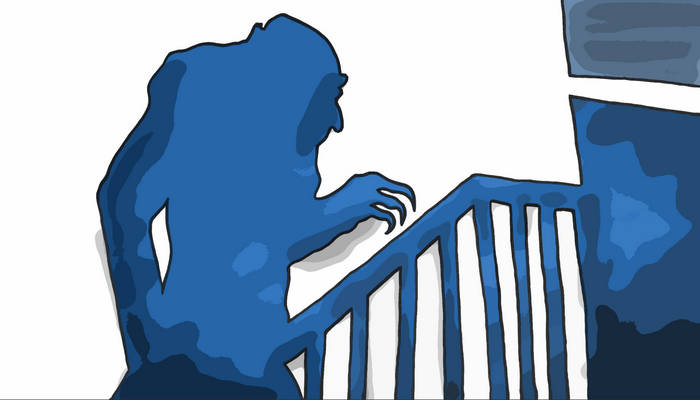
Like other horror archetypes, the figure of the vampire underwent progressive codification at the hands of Romantic-era writers. The young Englishman John Polidori started the process in 1819, writing a short story that managed to turn the vampire into an essential icon of Gothic literature. His protagonist already possessed many characteristics familiar to vampire fans today: surrounded by a cloak of mystery, Lord Ruthven had a noble bearing and an ability to seduce the fairer sex, and, obviously, he left a string of atrocities in his wake.
As we already see with Polidori's story, the image of the vampire was predominately influenced by the undead of Eastern European folklore - the Greek "Vrykolakas", Albanian "Shtriga", and Romanian "Strigoi" - but the genre was further enriched by new elements and scenarios thanks to authors such as Aleksey Tolstoy (a distant relative of Leo Tolstoy) and Sheridan Le Fanu who, in his "Carmilla" (1872), not only casts his vampire as a woman, but also introduces a series of elements that would become canonical. The definitive incarnation of the vampire, however, would arrive with Bram Stoker's "Dracula" (1897), a work whose importance to the nascent Seventh Art was unparalleled. In fact, the cinematic world quickly appropriated the "Nosferatu" character, starting with the eternal silent classic directed by F.W. Murnau (1922). After a string of successes for Universal Pictures in the 1930s and '40s, and a revival during the golden age of Gothic films (from the late 1950s through the 1960s), the figure of the vampire became the focus of several innovative attempts at "modernization" during the turbulent 1970s.
Step one was to abandon the 19th century in favor of a contemporary setting. Bob Kelljan gave it a go with "Count Yorga, Vampire" (1970), and the positive response from moviegoers was reason enough to prompt a rapid succession of similar fare: British Hammer Film Productions brought "Dracula A.D. 1972" (1972) to the big screen, and William Crain directed "Blacula" (1972), inspiring a wave of blaxploitation-themed horror films. The analogy between vampiric behavior - bleeding someone else dry in order to survive - and the Hobbesian, dog-eat-dog version of capitalism, constituted enough metaphorical potential in itself to ensure the success of this vampiric "rebranding", which, thanks in part to the prose of Anne Rice, led to a triumph of urban vampires, a ubiquitous presence in 1980s horror.
Meanwhile, the 1970s unleashed a cinematic wave of genre bending, and vampiric themes found new life blood in various sci-fi sub-genres (+) - post-apocalyptic films, fantabiology, and even space opera all became infested with bloodsuckers (or "life force" suckers, such as in the case of Tobe Hooper's much maligned "Lifeforce" - 1985). Unfortunately, after becoming fodder for infinite allegories (lack of communication, marginalization, contagion, sexual urges, diversity, etc.) and undergoing every imaginable treatment - from cartoon/comic book adaptations to questionable attempts to humanize the monster - the classic vampire got lost in the shuffle. Despite a continuing stream of vampire films in the new millennium, the sheer horror generated by the cruel, pitiless creatures of days gone by is only a distant memory. While we await better times, here's a brief list of the main, generally recognized traits and abilities of the classic vampire:
- virtual invulnerability, although not without certain Achilles' heels (e.g., sunlight, garlic, vervain, Christian religious symbols, etc.);
- a deathly pale complexion and nocturnal habits;
- prominent canine teeth (incisors in cases lacking poetic license);
- a strong tie to their native soil, which they generally sleep in;
- the ability to influence weak minds;
- extraordinary strength and agility;
- the ability to assume the guise of animals (e.g., bats and wolves);
- can be destroyed only by decapitation or by having their heart pierced by a stake made of ash wood.
The objective of this Tag is to assemble films dealing with "vampirism", including both actual vampires as well as individuals who, despite not being vampires, tend to behave as such (George A. Romero's 1977 "Martin" comes to mind).
Examples
- Cinema/Television: "Isle of the Dead" (Mark Robson, 1945), "Rabid" (David Cronenberg, 1977), "The Addiction" (Abel Ferrara, 1995).
- Literature (fiction): "For the Blood Is the Life" (Francis Marion Crawford, 1905), "Salem's Lot" (Stephen King, 1975), "Children of the Night" (Dan Simmons, 1992).
- Videogames: "Gabriel Knight 3: Blood of the Sacred, Blood of the Damned" (1999), "Dracula: Origin" (2008), "Vampyr" (2018).
The table below includes only the films we’ve already reviewed, filtered by the current Tag. We know many important titles are still missing: they’ll come in time. Some features are reserved for our Patreon supporters.
| Title | Directors | Year | Score |
|---|---|---|---|
| Bloodstone: Subspecies II | Ted Nicolaou | 1993 | 5 |
| Castle of Blood | Antonio Margheriti | 1964 | 6.5 |
| Curse of the Undead | Edward Dein | 1959 | 6.5 |
| Dracula | Dan Curtis | 1974 | 4.5 |
| Dracula A.D. 1972 | Alan Gibson | 1972 | 4 |
| Dracula Has Risen from the Grave | Freddie Francis | 1968 | 5 |
| Dracula: Prince of Darkness | Terence Fisher | 1966 | 7 |
| Fiend Without a Face | Arthur Crabtree | 1958 | 7 |
| First Man into Space | Robert Day | 1959 | 6 |
| Fright Night | Tom Holland | 1985 | 7 |
| Hercules in the Haunted World | Mario Bava | 1961 | 6 |
| Horror of Dracula | Terence Fisher | 1958 | 7.5 |
| Lady Morgan's Vengeance | Massimo Pupillo | 1965 | 5 |
| Near Dark | Kathryn Bigelow | 1987 | 6.5 |
| Not of This Earth | Roger Corman | 1957 | 5.5 |
| Queen of Blood | Curtis Harrington | 1966 | 5 |
| Salem's Lot | Tobe Hooper | 1979 | 6 |
| Scars of Dracula | Roy Ward Baker | 1970 | 4.5 |
| Scream and Scream Again | Gordon Hessler | 1970 | 4.5 |
| Sleepwalkers | Mick Garris | 1992 | 5 |
| Taste the Blood of Dracula | Peter Sasdy | 1970 | 6.5 |
| The Blood Beast Terror | Vernon Sewell | 1968 | 4 |
| The Brides of Dracula | Terence Fisher | 1960 | 7 |
| The Legend of the 7 Golden Vampires | Chang Cheh, Roy Ward Baker | 1974 | 3 |
| The Monster of the Opera | Renato Polselli | 1964 | 4 |
| The Monster Squad | Fred Dekker | 1987 | 4.5 |
| The Satanic Rites of Dracula | Alan Gibson | 1973 | 4 |
| Twins of Evil | John Hough | 1971 | 7 |
| Vampyros Lesbos | Jesús Franco | 1971 | 5.5 |