Plot
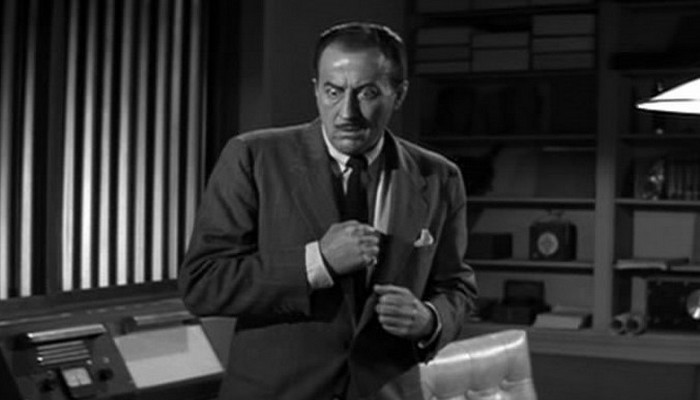
A man innocently driving his pickup down an isolated desert road at night becomes the victim of an extraterrestrial electrical entity that takes control of his mind, using him to break into “LabCentral”, a cutting-edge astrophysics research facility. From there, the alien energy force jumps to the mind of Dr. Hubbell Eliot, LabCentral’s director.
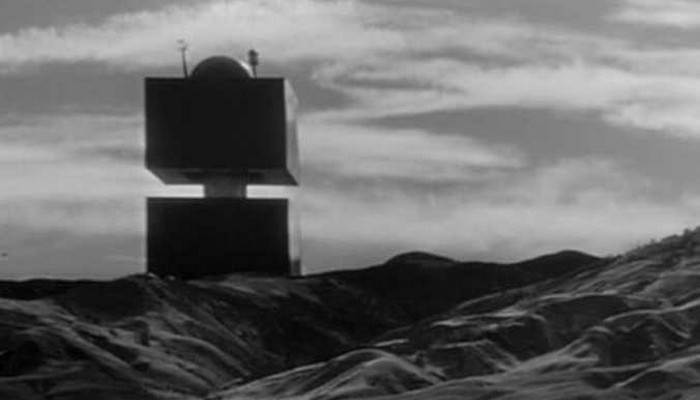
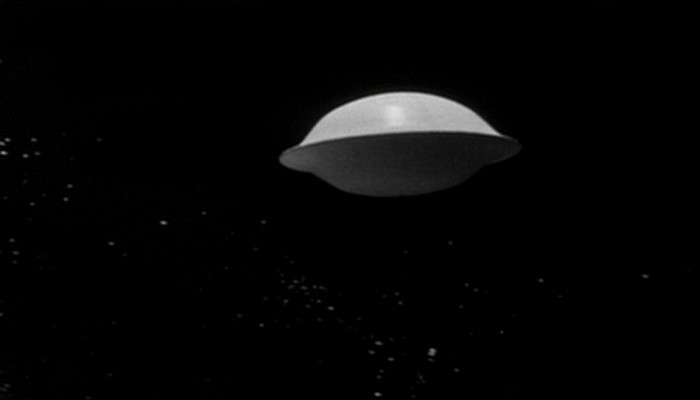
The alien’s audacious plan? To oversee a peculiar invasion of gigantic robotic “energy accumulators” that will drain the Earth of all its energy resources. The first of these mega-machines to land on our planet is Kronos, a 100-foot-tall giant that “sucks up energy like a sponge, feeds on it, is a walking storehouse of energy!“. This gleaming metal monster begins roaming the Pacific coast, leaving a trail of death and destruction in its wake.
Attempts on the part of the military to halt the mechanical behemoth’s advance turn out to be counterproductive since the energy unleashed by their attacks only serves to further feed the alien contraption (“Not only can he withstand any force we’re able to throw against him, but he will actually absorb that energy, become more powerful from it“).
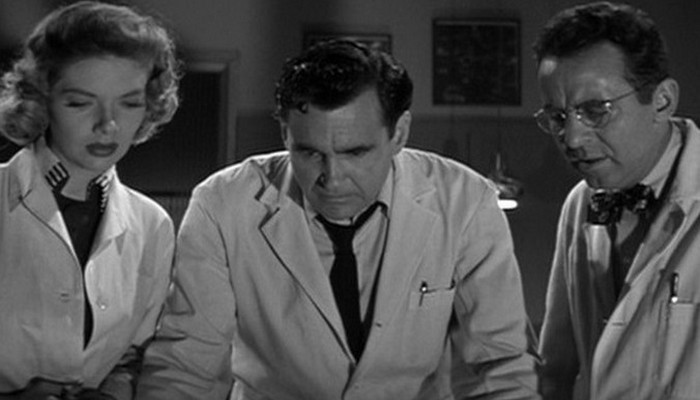
But when all seems lost and hope of saving humanity has been reduced to a feeble flicker, physicist Leslie Gaskell has a brainstorm: They can use aircraft to drop radioactive material on the leviathan.
According to Dr. Gaskell, it’s simply a matter of applying “the Attenberg Theorem [to] destroy the monster with his own energy“. What could possibly go wrong?
I'm convinced that the giant sucks up energy like a sponge, feeds on it.
Critique
4.5Minor independent classic of the 1950s helmed by a director well versed in the landscape of science fiction (“Rocketship X-M”, 1950; “The Fly”, 1958), “Kronos” counts a decent number of admirers both among fans of niche sci-fi as well as among critics who tend to focus on the prescient warnings about looming energy crises: “What has happened to them may well happen here, if we continue using our resources at the present rate“.
However, on the plot level, it’s fair to ask why such hyper-technological aliens would expend untold amounts of energy to travel light years through space to our little, out-of-the-way planet to steal the dribs and drabs of energy here when there are boundless sources of thermonuclear energy to tap all throughout the universe.
That aside, the film undeniably falters in the face of a string of formidable hurdles: Kurt Neumann’s flat direction struggles to generate that minimum tension even a low-budget production should aspire to, the mostly miscast actors are entirely inadequate (the embalmed Jeff Morrow looks more like an ironworker than a top scientist, while Barbara Lawrence – hand on her hip and shoulders back – looks like a model about to strut down the catwalk), and the special effects – mainly mediocre superimposed images and fake-looking animated sequences – are laughable. Rounding out the picture are superficial character motivations and a profusion of naivete.
Ultimately, the legendary 1950s gave us plenty of science fiction far more successful and interesting than this film.
More Info
Quotes
- Here on Earth we have learned only one half the nuclear secret. We can transform matter into energy. Up there, they have the other half. They transmute energy into matter!
- I can't get over the awful feeling that this is the calm and that the storm is going to break out any minute.
- I'm convinced that the giant sucks up energy like a sponge, feeds on it, is a walking storehouse of energy!
- Finding their planet depleted, they are scourging the universe for fresh supplies.
Trivia
- The name given to the alien mega-accumulator is a mythological reference to the titan Cronus (also spelled Cronos or Kronos, but not to be confused with Chronos, the personification of time) who deposed his father Uranus to become the second ruler of the universe, and later fathered Zeus (and a number of other Olympian Gods). Zeus later imprisoned his father and became king of the gods of Mount Olympus.
- If George O’Hanlon (Dr. Arnold Culver in the movie) sounds familiar, it’s because he was the voice of George Jetson in the Hanna-Barbera animated sci-fi sitcom “The Jetsons” which originally aired in 1962, with new episodes produced in the mid-1980s.
Products
Disclosure
This page contains affiliate links. As an Amazon Associate I earn from qualifying purchases.
Image source: Amazon Partner Program
| Product name | Price | |
|---|---|---|
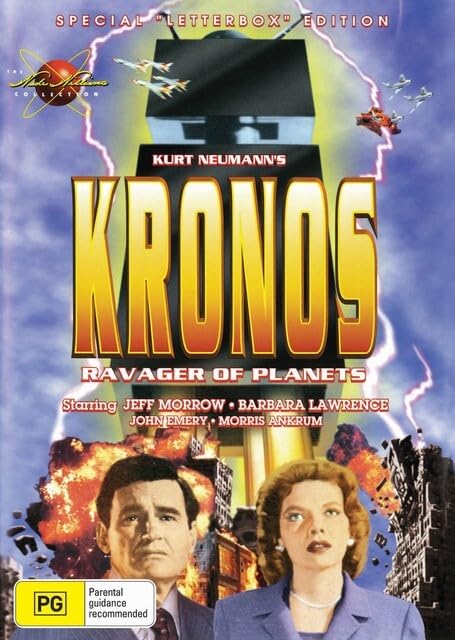 | Kronos, Ravager of Planets (aka Kronos) | |
 | Kronos | |
 | Kronos |
| Nome del prodotto | Prezzo | |
|---|---|---|
 | Piccola enciclopedia degli ultracorpi: I B-movies americani degli anni Cinquanta: Vol. 1 | |
 | Kronos-Il Conquistatore Dell'Univer |
| Product name | Price | |
|---|---|---|
 | Kronos - Il Conquistatore Dell'Universo | |
 | Kronos, Ravager of Planets (aka Kronos) |
| Nombre del producto | Precio | |
|---|---|---|
| Kronos - Il conquistatore dell'universo [Italia] [DVD] |
| Produktname | Preis | |
|---|---|---|
| Kronos - Il Conquistatore Dell'Universo | |
| Kronos, Ravager of Planets (aka Kronos) |
| Nom du produit | Prix | |
|---|---|---|
| Kronos - Il conquistatore dell'universo |
| Product name | Price | |
|---|---|---|
 | Kronos | |
| Kronos, Ravager of Planets (aka Kronos) |