Plot
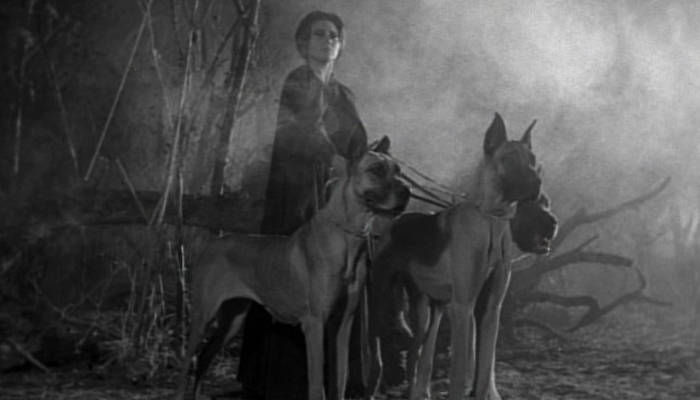
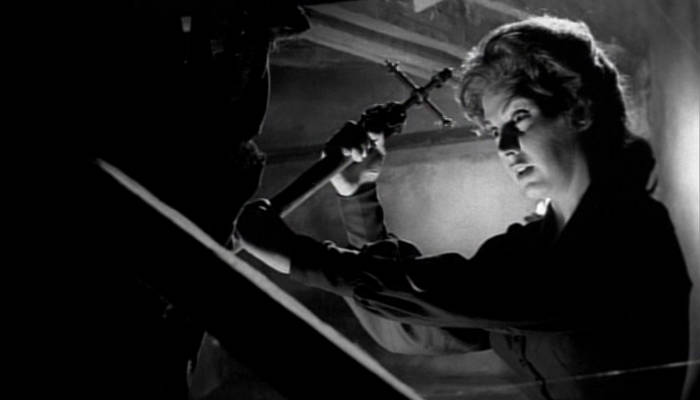
In the middle of a foreboding forest of gnarled trees somewhere in the heart of Mexico, a malevolent matron and her faithful henchman have been killing careless travelers who dare venture too near their gloomy, fog-enshrouded abode.
The cruel woman with unearthly black eyes is Selma, and she dreams of achieving supernatural omnipotence (she’s already well on her way, possessing a good number of “dark secrets” inherited from her wailing witch mother). All she needs to do is resurrect the dormant remains of her “Mommie Dearest” – also known as La Llorona – who’s rotting in the cellar. But according to prophecy, the key to restoring the hideous crone and achieving Selma’s ultimate objective lies in her unwitting niece Amelia, who’s just hours away from her twenty-fifth birthday. “It is written in the old books, the youngest of the dynasty who shall inherit her power shall bring her back to life. And you are the youngest!”.
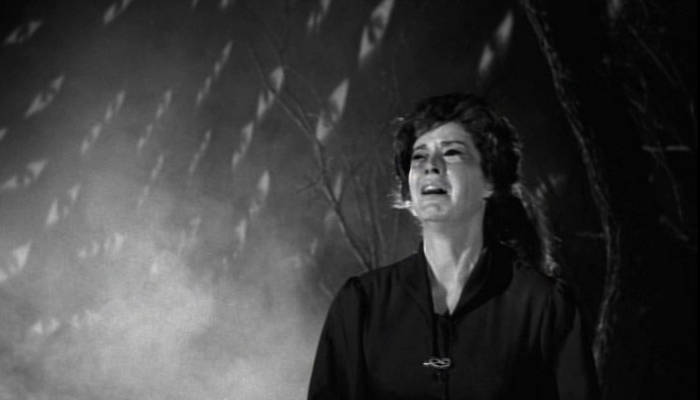
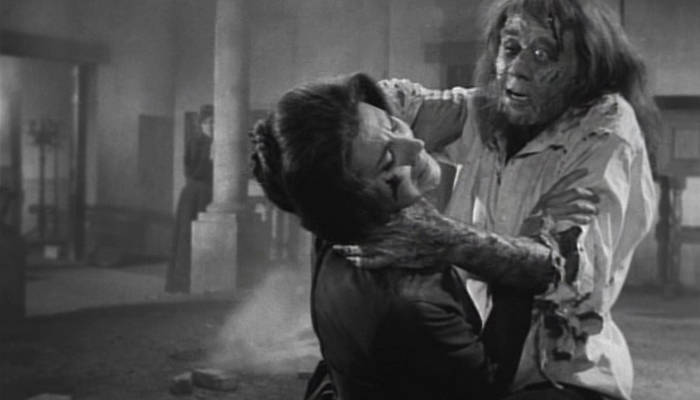
And so, having been lured by a mysterious summons to visit her only living relative’s crumbling “hacienda” for the first time since she was child, the wide-eyed Amelia (with new husband Jaime in tow) quickly finds herself plunging into a bloody abyss of murderous insanity, and only the desperate pleas of her husband can free her. Oh, the salvific power of love!
You shall soon return from oblivion and come to life once more...
Critique
6.5“The Curse of the Crying Woman” is an interesting example of a Mexican B movie directed with a keen sense of the macabre by Rafael Baledón who, reworking the age-old legend of “La Llorona” – in a rather twisted way, to tell the truth – manages to translate a genuine nightmare scenario into celluloid, and he does it on a tight budget.
The prolific Fernando Galiana came up with the story idea which certainly doesn’t lack in macabre imagination: ancient curses, an undead witch awaiting resurrection, vicious attack dogs trained to rip hapless intruders to shreds, a deformed butler who seems to have stepped out of a Jesús Franco film… all of it steeped in the misty, dusty, gloomy atmosphere of a sempiternal night.
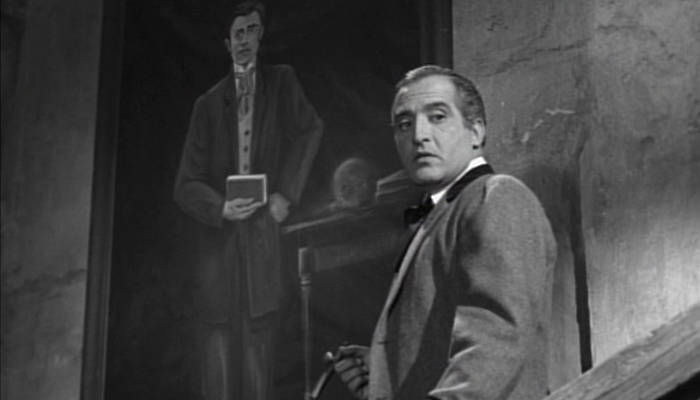
Although visually engaging and featuring a slew of endearingly disturbing dialogue (such as Aunt Selma’s cosmological vision that seems to take inspiration from Friedrich Nietzsche’s concept of “eternal recurrence” which holds that “all events in the world repeat themselves in the same sequence through an eternal series of cycles”), the film suffers a bit on the acting front. The newlyweds in particular aren’t terribly convincing: Rosa Arenas – whose performance is exceedingly theatrical – nonchalantly flits between scenes where she seems absolutely terrified of her aunt and others where she’s aggressively giving her the third degree, and Abel Salazar, brother of screenwriter Alberto Salazar and popular leading man in Mexican horror films of the 1950s and ’60s, seems like he’s less than thrilled being relegated to a secondary, background role, definitely a step down from his starring turn as no less than “El Barón del Terror” (1962).
But those deficiencies don’t really detract that much, given that with such a dark, menacing story, it’s the “villains” that take center stage, and from that point of view, the wide gamut of disturbed and disturbing characters is well rendered by a cast equal to the material.
More Info
Quotes
- One century follows another repeating themselves time and again. Each moment we live has already existed before and will exist again. But everything is recorded in the mirror of oblivion with the flame of time.
- Distinguished Lady of Darkness, it is almost time. You shall soon return from oblivion and come to life once more and bestow on me the omnipotence I have wished for!
- People and things change. The only one who remains unchanging is time.
Trivia
- “La Llorona” is a widely known figure in Latin American folklore. Although there are numerous versions of the legend (depending on the country), the “llorona” is generally a wailing female ghost (“llorar” is Spanish for “to cry” or “to weep”) who roams waterfront areas mourning her drowned children. Philologically speaking, the myth of La Llorona among Hispanic populations was heavily influenced by elements present in pre-Columbian cultures of Central and South America.
- Among Mexican films dedicated to the Llorona, we would note the seminal “La Llorona” (“The Crying Woman”) by René Cardona (1960) and “La venganza de la llorona” (“The Revenge of the Crying Woman”) by Miguel M. Delgado (1974), umpteenth film featuring masked Mexican wrestler “Santo” (he starred in nearly 60 motion pictures).
Products
Disclosure
This page contains affiliate links. As an Amazon Associate I earn from qualifying purchases.
Image source: Amazon Partner Program
| Product name | Price | |
|---|---|---|
![The Curse of the Crying Woman (Standard Edition) [Blu-Ray]](https://m.media-amazon.com/images/I/71I-i2Xk4uL._SL75_.jpg) | The Curse of the Crying Woman (Standard Edition) [Blu-Ray] | |
 | The Curse of the Crying Woman |
| Nome del prodotto | Prezzo | |
|---|---|---|
| The Curse of the Crying Woman (UK Standard Edition) |
| Product name | Price | |
|---|---|---|
 | The Curse of the Crying Woman (UK Standard Edition) | |
 | The Curse of the Crying Woman | |
![Curse of the Crying Women [DVD] [Region 1] [US Import] [NTSC]](https://m.media-amazon.com/images/I/51oAffUUcXL._AC_.jpg) | Curse of the Crying Women [DVD] [Region 1] [US Import] [NTSC] |
| Nombre del producto | Precio | |
|---|---|---|
| The Curse of the Crying Woman (UK Standard Edition) |
| Produktname | Preis | |
|---|---|---|
| The Curse of the Crying Woman (UK Standard Edition) |
| Nom du produit | Prix | |
|---|---|---|
| The Curse of the Crying Woman (UK Standard Edition) |
| Product name | Price | |
|---|---|---|
| The Curse of the Crying Woman (UK Standard Edition) | |
| The Curse of the Crying Woman (Standard Edition) [Blu-Ray] |