Plot
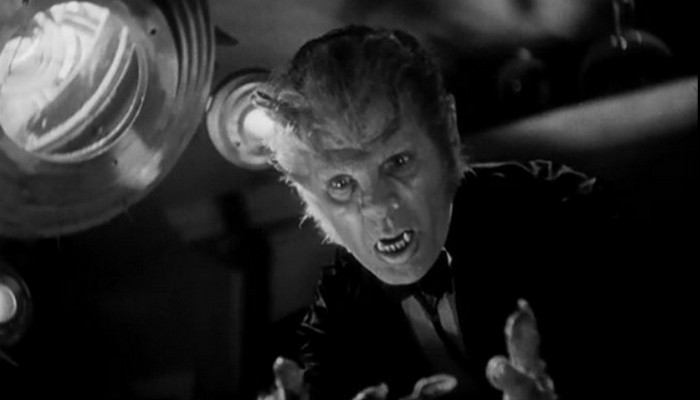
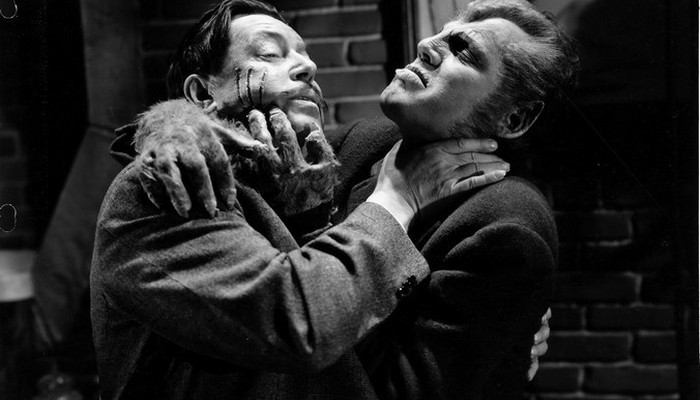
During a scientific expedition to the Himalayas, a wealthy English botanist is attacked and bitten by a bearlike creature while collecting a specimen of the elusive, indigenous “mariphasa” plant. Once back on British soil, the scientist discovers that the bite has turned him into a werewolf, causing his body to transform into a murderous beast on nights with a full moon. The only (temporary) cure for this vexatious condition is offered by the blossom of that very flower he collected, the so-called “Mariphasa lupino lumino”, a legendary plant which apparently blooms only under moonlight.
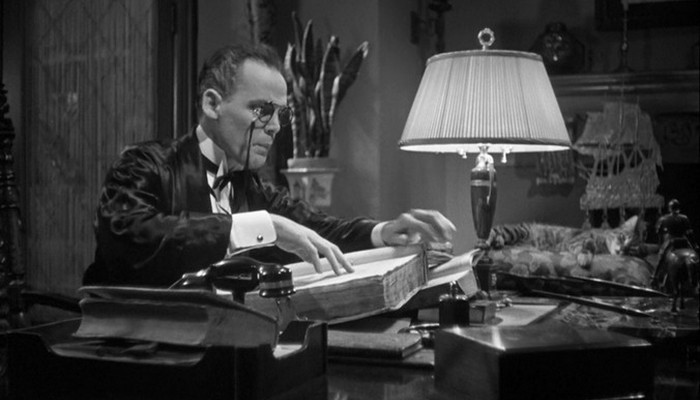
Determined to extract the curative serum, the man quickly retreats to his personal laboratory and sets to work enticing the reluctant flower to bloom, but a mysterious figure lurks in the shadows, waiting for his opportunity to seize the coveted anti-lycanthropic preparation.
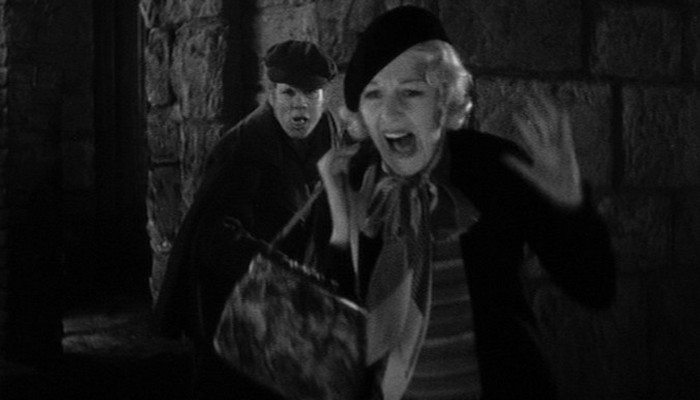
With the flower stolen, the tormented botanist is forced to transform into a ferocious beast with an instinctive urge to hunt and kill…
The werewolf instinctively seeks to kill the thing it loves best.
Critique
6Six years before “The Wolf Man” (1941), Universal Pictures tackled the theme of lycanthropy in “Werewolf of London”, a somewhat forgotten film skillfully helmed by a director (who subsequently moved on to producing) capable of balancing tension and drama without showing disdain for brief comedic interludes (traits also found in other movies of the period, such as “Mystery of the Wax Museum”, 1933).
Technically compelling, the film stirs interest on a content level thanks to a certain originality in the way the material is treated, with the science fiction component given subtle emphasis within a context that’s traditionally linked to an exclusively metaphysical conception of horror (in this sense, the unfortunate Dr. Glendon is the victim of a pathogen rather than of a true curse).
As further confirmation of that scientific focus, we have scenes such as the one which meticulously describes the supposed physiological properties of the “Mariphasa” plant, and more generally, we can consider the weight placed on the reflections and doubts expressed by the protagonist. At any rate, the fact remains that we’re still left with the conviction – born of typical 19th-century anxieties – that science is meddling in fields where it has no right to interfere (“Only God can make a daffodil“; “It don’t leave nothing for heaven to do“; “Father in Heaven, don’t let this happen to me again“). This contemplation of science is reminiscent of eternal classics of 19th-century literature, from Mary Shelley’s “Frankenstein” (1818) to Robert Louis Stevenson’s “Dr. Jekyll and Mr. Hyde” (1886), whose ending is substantially identical to that of Rouben Mamoulian’s 1931 film adaptation, incidentally.
Soundly theatrical performance by Henry Hull, who turns titular werewolf Dr. Glendon into an emotional character struck by a profound sense of torment and anxiety.
More Info
Quotes
- We're looking for the 'Mariphasa lupino lumino', a strange flower which grows only in Tibet and which, it is said, takes its life from the moon.
- The werewolf is neither man nor wolf, but a satanic creature, with the worst qualities of both.
- 'Lycanthrophobia' is the medical term for the affliction I speak of.
- The werewolf instinctively seeks to kill the thing it loves best.
- Thanks for the bullet. It was the only way...
Trivia
- Initially, Bela Lugosi was supposed to play Dr. Glendon (or, alternatively, Dr. Yogami). He’ll get another shot in the role of the gypsy “Bela” in “The Wolf Man” (1941).
- The figure of the lycanthrope will take on even greater medical/scientific implications in “The Werewolf” (1956).
- The film takes certain taxonomic liberties referring to the so-called “phosphorescent wolf flower.” In fact, during the course of the story, it’s called both “Mariphasa lupino lumino” and “Mariphasa lumina lupina“, as if the commutative property of mathematics applies to the trinomial nomenclature of biology. However, that would quash the hierarchical order of the categories (i.e. genus, species, subspecies/variety/cultivar), whose definition is precisely outlined by the strict logical order of the constituents, without which it would be impossible to determine the reciprocal relationships and different levels of inclusion. And that doesn’t even take into account those strangely shifting vowels…
- On the subject of taking liberties with words, multiple characters in the film use the word “lycanthrophobia” (which they seemingly invented), calling it “the medical term for werewolfery”! (So much for the film’s emphasis on science!) The word lycanthrophobia doesn’t officially exist, and if it did, strictly speaking, it should mean the fear of werewolves (the words “lupophobia” and “lycophobia”, however, do exist, and mean the fear of wolves and werewolves, respectively). The more common (and proper) term for the supernatural transformation of a person into a wolf is, of course, “lycanthropy”.
Products
Disclosure
This page contains affiliate links. As an Amazon Associate I earn from qualifying purchases.
Image source: Amazon Partner Program
| Product name | Price |
|---|
| Nome del prodotto | Prezzo | |
|---|---|---|
 | The Wolf Man / Werewolf Of London |
| Product name | Price |
|---|
| Nombre del producto | Precio | |
|---|---|---|
![Werewolf of London [Reino Unido] [DVD]](https://m.media-amazon.com/images/I/51wBYYhAqAL._SL75_.jpg) | Werewolf of London [Reino Unido] [DVD] |
| Produktname | Preis |
|---|
| Nom du produit | Prix | |
|---|---|---|
 | Le Monstre de Londres - DVD |
| Product name | Price | |
|---|---|---|
 | Werewolf of London from Left Henry Hull Valerie Hobson Warner Oland 1935 Movie Poster Masterprint (11 x 17) | |
 | Posterazzi Werewolf of London Warner Oland Henry Hull 1935 Movie Masterprint Poster Print (11 x 17) |