A glimpse into the world of cinematic horror and sci-fi.
Expressionism
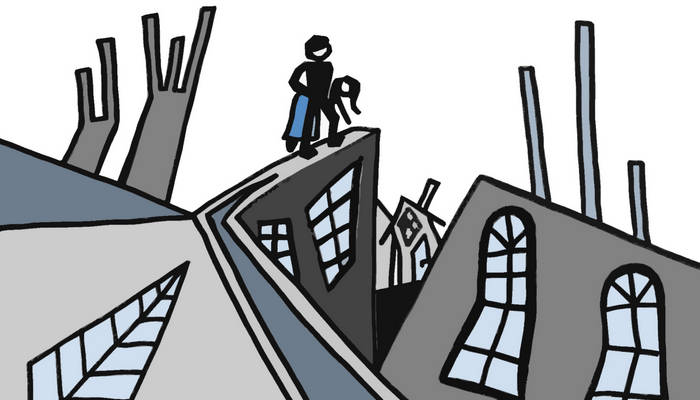
Thus, the stylistic imprint of German Expressionism lies in its marked distortion of reality, that is, a refusal to represent reality objectively, along with an extreme exaggeration of the emotional component - elements that, when it comes to the Seventh Art, translate into a depiction of hallucinatory and/or suffocating contexts through the use of sets rich with non-naturalistic backgrounds, often characterized by unrealistic design, vertiginous perspectives, distorted architecture, warped angles, and an unsettling play of shadows pierced by violent slices of light. Customarily wandering through these sets are mysterious, estranged characters, generally played by heavily made-up actors affecting a theatrical performance.
Unconventional with a penchant for shadowy fantasy, Expressionist films are imbued with themes of unprecedented bleakness. On one side are cruel tormentors, deranged megalomaniacs, evil doppelgängers - on the other are fragile, frightened souls, estranged characters, victims of an adverse fate. With that in mind, it's certainly no coincidence that "The Cabinet of Dr. Caligari" ("Das Cabinet des Dr. Caligari", 1920), the quintessential work of German Expressionist cinema, is considered by many to be the first true horror film. This Tag is intended to group together films whose esthetics evoke, at least in part, the style and philosophy described above.
Examples
- Cinema/Television: "Genuine: The Tragedy of a Vampire" (Original title: "Genuine, die Tragödie eines Seltsamen Hauses", Robert Wiene, 1920), "Warning Shadows" (Original title: "Schatten – Eine Nächtliche Halluzination", Arthur Robison, 1923), "Faust" (Original title: "Faust: Eine Deutsche Volkssage", Friedrich Wilhelm Murnau, 1926).
The table below includes only the films we’ve already reviewed, filtered by the current Tag. We know many important titles are still missing: they’ll come in time. Some features are reserved for our Patreon supporters.
| Title | Directors | Year | Score |
|---|---|---|---|
| Frankenstein | James Whale | 1931 | 8 |
| Murders in the Rue Morgue | Robert Florey | 1932 | 7 |